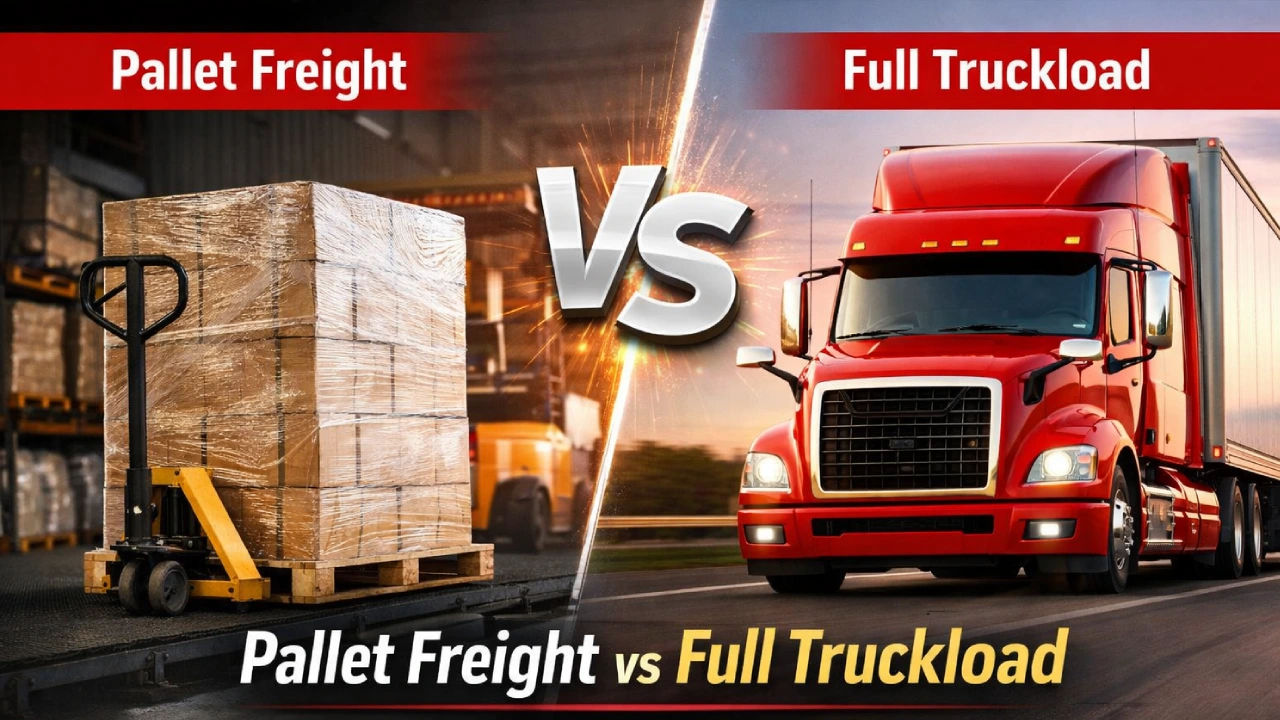
Choosing the right freight solution is one of the most important decisions for businesses managing logistics across Australia. Whether you are shipping small palletised goods or large bulk consignments, understanding the difference between pallet freight vs full truckload can help you reduce costs, improve delivery efficiency, and protect your cargo.
Australia’s vast geography makes freight planning even more critical. Businesses must carefully evaluate freight transport options in Australia to ensure timely and cost-effective deliveries. Two of the most commonly used transport methods are pallet freight (LTL) and full truckload (FTL) shipping.
If you’re unsure which option is right for your business, this detailed guide will break down everything you need to know — from cost and speed to risk and scalability.
What Is Pallet Freight?
Pallet freight, also known as Less Than Truckload (LTL) shipping, refers to transporting goods on pallets where multiple shipments from different customers share the same truck space.
Instead of paying for the entire vehicle, businesses only pay for the portion of space their shipment occupies. This makes pallet freight one of the most economical choices for small to medium-sized shipments.
Businesses using pallet freight services Australia often benefit from lower transport costs and flexible scheduling, especially when dealing with regular but smaller shipments.
👉 For businesses looking to optimise smaller shipments, explore our pallet-based freight solutions:
Read More: pallet freight services
When to Use Pallet Freight Services
Pallet freight is ideal when:
-
You don’t have enough goods to fill an entire truck
-
You want to minimise transport costs
-
Your shipment is not time-sensitive
-
You ship regularly in smaller volumes
This method is widely used in retail, eCommerce, and manufacturing industries where shipments are frequent but not large enough for full truckloads.
What Is Full Truckload (FTL) Transport?
Full Truckload (FTL) shipping involves dedicating an entire truck to a single shipment. The goods are not shared with other customers, and the vehicle travels directly from pickup to delivery.
This makes full truckload transport Australia a preferred choice for businesses with large shipments or urgent delivery requirements.
👉 Learn more about our dedicated transport solutions:
Read More: interstate transport services
When to Use Full Truckload Transport
FTL is the best option when:
-
You have large or bulk shipments
-
Delivery speed is critical
-
Your goods are fragile or high-value
-
You want minimal handling and maximum safety
FTL ensures a streamlined logistics process, reducing delays and risks associated with multiple stops.
Key Differences Between Pallet Freight and Full Truckload
Understanding the core differences between LTL vs FTL shipping will help you make the right logistics decision.
Cost Comparison
Cost is often the biggest factor when choosing between pallet freight and FTL.
-
Pallet Freight (LTL):
Lower cost because multiple shipments share the same truck -
Full Truckload (FTL):
Higher upfront cost as you pay for the entire vehicle
However, when shipping large volumes, FTL can actually become more cost-efficient per unit.
Delivery Speed
Delivery timelines differ significantly between the two options.
-
FTL Transport:
Faster delivery due to direct routes with no additional stops -
Pallet Freight:
Slower delivery because of consolidation, sorting, and multiple drop-offs
If your business depends on strict delivery schedules, FTL is the better choice.
Shipment Size
Shipment size determines which option is more practical.
-
Pallet Freight: Best for small to medium shipments
-
FTL: Ideal for large or full-capacity loads
Choosing the wrong option can lead to unnecessary costs or delays.
Handling and Risk
Handling impacts the safety of your goods.
-
LTL Shipping:
More handling increases the risk of damage -
FTL Shipping:
Minimal handling ensures better safety
For fragile, sensitive, or high-value goods, FTL provides greater protection.
Also Read: How 3PL Warehousing Helps Australian Businesses Scale Faster
Pros and Cons of Pallet Freight
Advantages of Pallet Freight
✅ Cost-Effective
Sharing truck space significantly reduces shipping costs.
✅ Flexible Shipping
No need to wait until you have a full truckload.
✅ Ideal for SMEs
Small businesses benefit from affordable logistics solutions.
Disadvantages of Pallet Freight
❌ Longer Transit Time
Multiple stops can delay delivery.
❌ Higher Risk of Damage
Frequent handling increases potential risks.
Pros and Cons of Full Truckload Transport
Advantages of FTL Transport
✅ Faster Delivery
Direct routes ensure quicker transit times.
✅ Reduced Handling
Lower risk of damage due to minimal handling.
✅ Dedicated Service
You have full control over scheduling and delivery.
Disadvantages of FTL Transport
❌ Higher Cost
Not ideal for smaller shipments due to higher pricing.
❌ Underutilisation Risk
Paying for unused space can increase costs.
Which Option Is Better for Your Business?
The choice between pallet freight and full truckload depends on your operational needs.
Choose Pallet Freight If:
- You ship smaller quantities regularly
- You want to reduce logistics costs
- Delivery time is flexible
- You need scalable freight solutions
Choose Full Truckload If:
- You have large shipments
- You need fast delivery
- Your goods require extra safety
- You want a dedicated vehicle
How to Choose the Right Freight Transport Option in Australia
To select the best freight transport option in Australia, consider the following factors:
1. Shipment Volume
Evaluate whether your goods require a full truck or just partial space.
2. Delivery Urgency
Time-sensitive shipments should always prioritise faster options like FTL.
3. Budget Planning
If cost efficiency is your goal, pallet freight is often the better choice.
4. Nature of Goods
Fragile or valuable goods require safer handling, making FTL ideal.
5. Distance and Route
For interstate logistics, both pallet freight and FTL can be effective depending on urgency and volume.
Industry Insights: Logistics Growth in Australia
Australia’s freight industry continues to grow rapidly due to increasing demand for eCommerce and supply chain efficiency.
According to the Australian freight and supply chain strategy, improving freight efficiency is critical for economic growth and national connectivity.
Additionally, organisations like the Supply Chain and Logistics Association of Australia (SCLAA) play a key role in promoting innovation and best practices in the logistics sector.
Data from the Australian Bureau of Statistics (ABS) also highlights the growing demand for warehousing and transport services across the country.
These insights reinforce the importance of choosing the right freight solution for long-term business success.
Why Choosing the Right Logistics Partner Matters
When comparing pallet freight vs full truckload, there is no one-size-fits-all solution. Each option has its advantages depending on your shipment size, delivery urgency, and budget.
-
Choose pallet freight for cost-effective, flexible shipping
-
Choose FTL transport for speed, safety, and efficiency
By understanding your logistics requirements and working with a trusted freight partner, you can optimise your supply chain and improve business performance.
As Australia’s logistics landscape continues to evolve, businesses that make smarter freight decisions will stay ahead of the competition.
Final Thoughts
When comparing pallet freight vs full truckload, there is no one-size-fits-all solution. Each option has its advantages depending on your shipment size, delivery urgency, and budget.
-
Choose pallet freight for cost-effective, flexible shipping
-
Choose FTL transport for speed, safety, and efficiency
By understanding your logistics requirements and working with a trusted freight partner, you can optimise your supply chain and improve business performance.
As Australia’s logistics landscape continues to evolve, businesses that make smarter freight decisions will stay ahead of the competition.